
Our tips for a successful move
Save time and money
Here are some tips from our experts to boost your team’s efficiency and reduce the stress of your move!
Table of contents
Get well prepared
First, clear access to doors and hallways so that our team can move around freely and easily.
Elevators
If an elevator is available in your building, ask the administration to reserve it for you for the day. This will save you time and money.
Parking
Try to reserve a space for our truck. Ideally, you should have a space equal to 3 car lengths along the curb and facing your home. Please remember that it is illegal to block emergency vehicle access.
Let your neighbours know the date and time of your move and ask them to help by moving their cars off the street during that time.
Winter conditions
Access to your home must be safe. Have the snow removed and use ice melt if there is any ice present.
Choose the right time
The moving industry is sensitive to fluctuations in supply and demand. Hourly rates are generally lower outside of peak periods.
If you can choose your moving date, try to avoid the busy season, which runs from mid-May to mid-July.
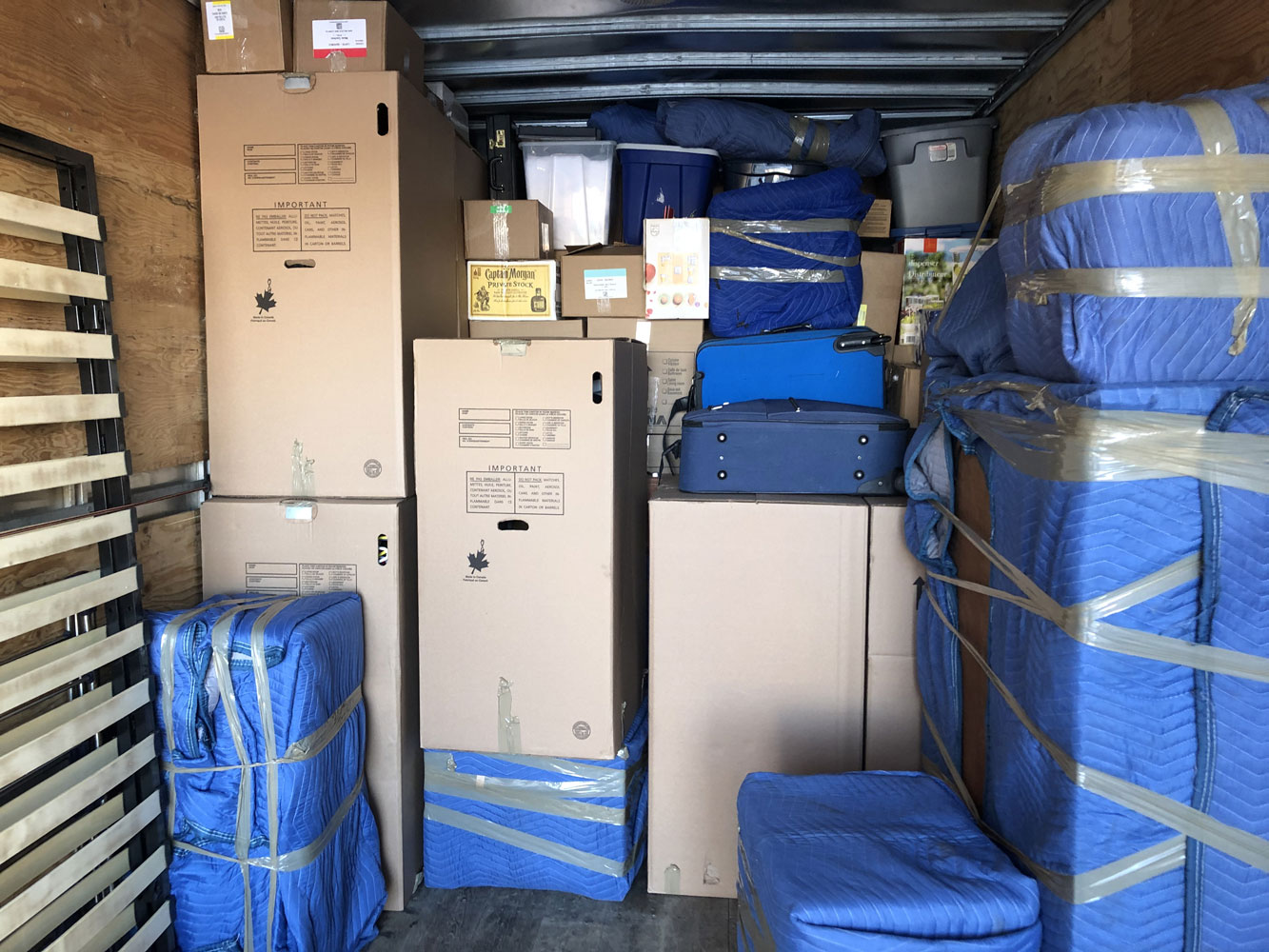
Use the right equipment
- Use new, sturdy boxes that can be fully closed on top.
- Use special boxes for mirrors, artwork, stemware, and lampshades.
- Use bubble wrap for very fragile items, and use white packing paper instead of newspaper, as newsprint can leave ink residue on your belongings.
- Use sturdy tape and permanent markers. Clearly label the contents of the box on top, and indicate the destination room on both the top AND the side of the box. Use arrows to show orientation and "FRAGILE" labels when needed. When it's time to unpack, you'll be glad you took these precautions.
- Ask your Intact advisor to help you choose the type and number of boxes needed for your move.
Take advantage of our packing tips
When packing, take the time to do a careful job. Being well prepared will make things easier for our movers and reduce the time it takes to complete your move.
Make sure everything is packed, sealed, and labelled before we arrive. If all the boxes can be placed in one area of your home, that will also make the job easier.
The most efficient packing method is room-by-room, with clear labelling on the box indicating its contents and thedestination room in your new home. This way, we can place each box in the right spot, making your unpacking that much easier.
Box contents
Pack heavy items (books, canned goods, etc.) in smaller boxes, and light or more fragile items in larger boxes (for example, lampshades). Pillows and blankets can be placed in large boxes.
Always fill boxes with the heaviest items first and lighter items on top. Use all available space in the box so that it has a solid structure and does not collapse when stacked in the truck.
That said, don’t overfill your boxes to the point of bulging – that’s how items get broken. Make sure your boxes are properly closed and sealed with tape all around – open boxes cannot be stacked.
Hanging clothes
You don’t need to pack your hanging clothes yourself, as Demenagement Intact trucks are always equipped with a minimum of 4 wardrobe boxes. We provide these boxes for the duration of your move. Each box can hold about thirty hangers.
As for clothes stored in dresser drawers, we recommend packing them in large boxes to reduce the weight of your furniture and, therefore, the risk of damage.
Garbage bags and plastic bins
Avoid packing items in garbage bags or grocery bags. They are not durable, tear easily, and cannot be stacked properly. Overfilled hockey bags or suitcases are also not recommended.
As for plastic bins, Demenagement Intact does not recommend using them instead of cardboard boxes. Their smaller volume makes it hard to pack larger items, and they can scratch floors. However, a few bins can be useful for packing liquid bottles or the contents of your fridge, for example.
Disassembly and hardware
If flat-pack furniture was assembled inside your home, there is a good chance it will need to be disassembled before the move. We can handle this for you, but please inform us in advance so we can schedule the necessary crew and tools.
If you disassemble furniture yourself, be sure to gather all the components (screws, bolts, dowels, Allen keys, etc.) in a labelled bag and tape it securely to the piece of furniture it belongs to. Please also let us know if you would like us to reassemble your furniture in your new home.
Wiring
Wrap and tape the cords of appliances and small devices such as lamps and TVs. Use good, sturdy packing tape. For tall floor lamps, secure the cord to the lamp’s stand to prevent movers from tripping over it.
Mirrors and paintings
Mirrors, paintings, and artwork should be placed in specially designed boxes to protect them during the move. Use bubble wrap to protect them. For valuable paintings and mirrors, we recommend a telescoping mirror box, which can be adjusted to fit different sizes.
Fragile items
Clearly mark all boxes containing fragile items with a “FRAGILE” label so that we handle them with care. Be sure to wrap fragile items in bubble wrap or packing paper before placing them in boxes. Line the boxes with crumpled paper to provide extra cushioning. Use new, sturdy boxes.
Dishware
Line the bottom of your dish boxes with crumpled packing paper for extra cushioning. Place plates on their edge, standing up. Don’t skimp on paper, and avoid letting two pieces of dishware touch each other directly. Don’t flatten the paper around the dishware too much, and make sure to trap air between the paper and the item (‘puffing’) to create a cushioning effect.
Stemware should always be wrapped in 2 sheets of paper and placed upside down in the box, base up. Use crumpled paper to fill any empty spaces in the box so nothing can shift inside. You’ll find several tips and tricks videos on YouTube for packing dishware properly.
Essentials bag
Unpacking can be a long and tedious process. Prepare an easy-to-recognize overnight bag containing everything you might need for the next 24 to 48 hours. Toiletries, a change of clothes, medications… and a fresh roll of toilet paper will come in very handy.
Appliances
This is especially true for gas stoves and dryers, refrigerators with water dispensers, and dishwashers. The same applies to reinstallation in your new home.
Wall-mounted TVs
Wall-mounted TVs must be uninstalled and reinstalled by a specialized technician. Intact’s professional movers will then pack them with special care to prepare them for transport.
Exceptionally valuable items
It is strongly recommended that you keep and transport certain valuable or important items yourself. Cash, bearer securities, jewellery, family heirlooms, important personal documents (passports, hospital cards, birth certificates, wills, warranty receipts, insurance documents, etc.), family photos, or other documents related to your move are all examples of items we suggest you transport yourself.